

One normalized API for session data, charger status, demand response commands, and billing records — across every EV charging network in your fleet or facility.
North America's EV charging infrastructure is split across more than 30 competing networks — ChargePoint, Blink, EVgo, Tesla, and dozens of regional operators — each running proprietary software with incompatible data formats, authentication systems, and billing APIs.
A fleet manager operating vehicles across multiple charge networks cannot pull a single utilization report. A property manager cannot manage charger access across three vendor brands from one dashboard. The data exists. It just lives in disconnected silos.
Emobi's gateway sits between your software and every charging network you use. It maintains persistent authenticated sessions with each connected network's management system, translates incoming API calls into each network's proprietary format, and returns everything in one normalized JSON schema.
One integration. Every network. No custom adapters to maintain.
Pull normalized charging session records from all connected networks with a single API call. Filter by date range, location, vehicle, or network. Emobi's session layer syncs from each network on a configurable interval and normalizes records to a consistent schema.
Fleet operators managing vehicles across ChargePoint, Blink, EVgo, and Tesla can query their entire session history in one request — no separate logins, no manual exports.

Real-time connector availability and fault status for every charger registered under your account — regardless of network or hardware vendor. For OCPP-direct chargers, status is live via persistent websocket. For network-API chargers, latency follows the network's published refresh rate.
Per-connector status includes availability state, last-seen timestamp, and error code classification when faulted. Alerts route to customer webhook endpoints.
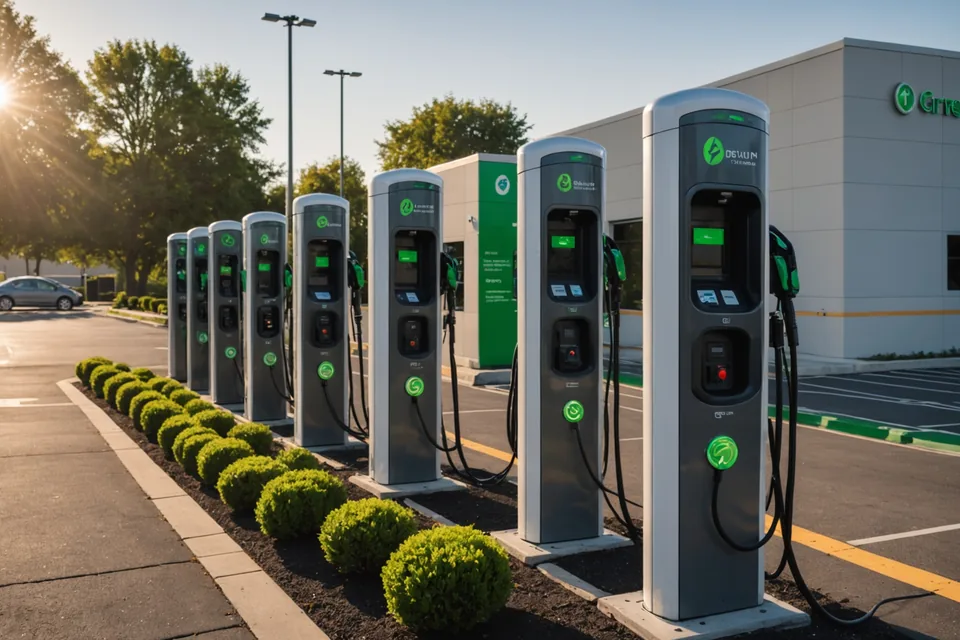
Translate OpenADR 2.0 event signals and direct charge-rate commands into each network's native control mechanism. A single Emobi DR command targeting a facility segment fans out to all relevant chargers simultaneously, with per-charger acknowledgement tracked and returned.
Built for utilities and energy managers running load curtailment programs across mixed-vendor commercial fleets. Supports NAESB OpenADR 2.0 and direct API charge-rate override commands.
Emobi's billing engine ingests raw transaction records from every connected network and applies configurable reconciliation rules: cost-center tagging by vehicle or driver ID, reimbursement rate calculation for employee home charging, and markup/discount layers for property managers.
Export formats compatible with SAP Concur and standard AP upload workflows. No more monthly spreadsheet work.

Uptime tracking and fault alerting across your entire mixed-network charger portfolio. Emobi's monitoring layer tracks connector uptime, fault rates, and offline events, surfacing aggregated health metrics through the API and a read-only dashboard view.
Fault events are classified by severity and trigger configurable webhook alerts to customer systems — so you know before your drivers find an unavailable charger.
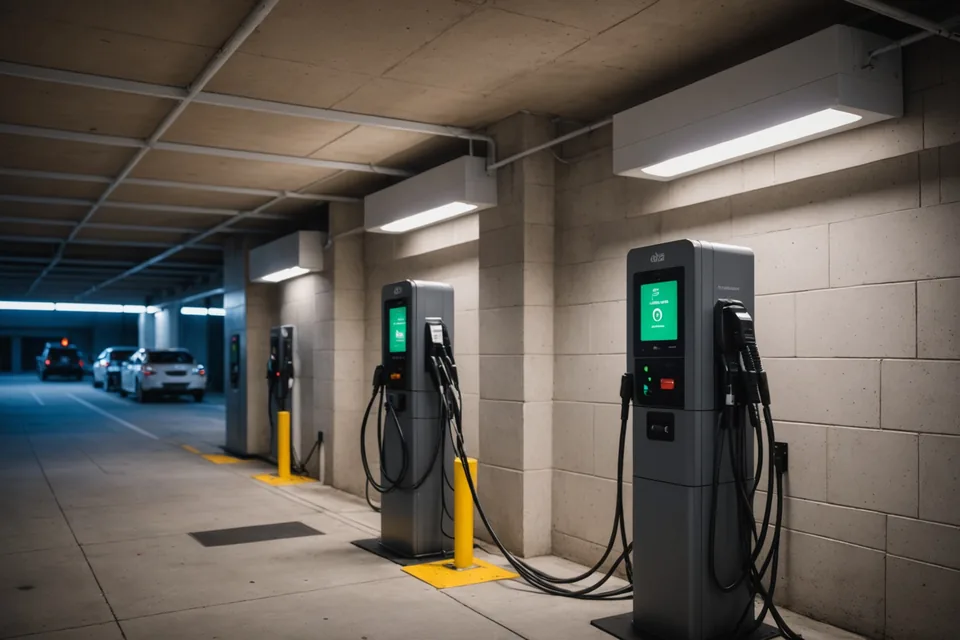
Emobi acts as a normalization layer between your application and the fragmented landscape of EV charging networks. Instead of building and maintaining separate integrations for ChargePoint, Blink, EVgo, Tesla, and regional OCPP networks — each with different authentication schemes, session record formats, and API versioning — your software makes a single authenticated request to Emobi's gateway API. Emobi translates that request into the appropriate per-network call, normalizes the response into a consistent session data schema, and returns structured results your team can work with immediately. For demand response workflows, Emobi routes commands to enrolled chargers via OpenADR 2.0. For billing reconciliation, Emobi maps session data to SAP Concur export formats. The integration surface your team maintains is one: the Emobi API.
Companies operating 10–1,000+ battery electric vehicles across multiple charge networks. Fleet managers spending hours each week reconciling charging data across ChargePoint, Blink, EVgo, and Tesla portals — Emobi replaces all of that with a single API call.
Commercial real estate operators and facility managers deploying multi-vendor EV charging across office campuses, retail centers, and multi-tenant buildings. Managing charger access and billing across three EVSE brands from one integration point instead of three vendor dashboards.
Developers and product teams building fleet electrification software, energy management platforms, or demand response systems who need a normalized EV charging data layer without building and maintaining 30+ proprietary API adapters themselves.
Walk through a live demo with the Emobi team. Bring your network list and current integration setup — we'll show you exactly what connects.